


On the road
Where to Watch Trinidad Carnival: Free and Paid Viewing Spots
By Soca Carnival EditorsUpdated 6 min read
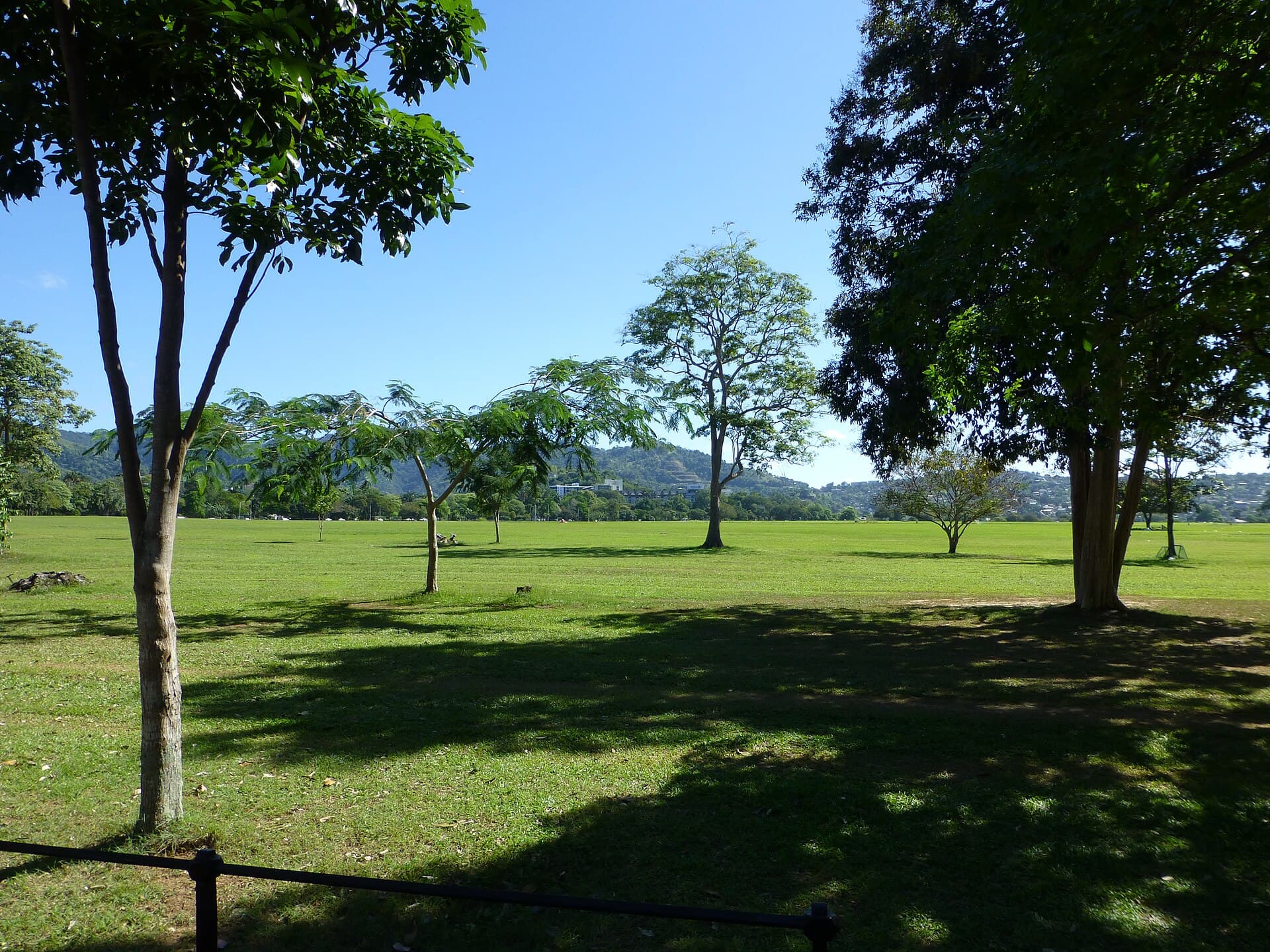
Image credit: Grueslayer, via Wikimedia Commons, CC BY-SA 4.0
The short answer
You do not need a ticket to watch Trinidad Carnival. The Parade of the Bands happens on public streets, and standing at the roadside is free, legal and what most locals do. Tickets matter only if you want a reserved seat in the stands at the Queen's Park Savannah, where the bands cross the stage. This guide explains the route, the free spots, the paid stands and what to carry, so you can choose the experience you actually want.
How the parade works
The Parade of the Bands runs on Carnival Monday and Carnival Tuesday.1 Bands form up in the morning and make their way to the Queen's Park Savannah, the large open park north east of the city centre. There, each band crosses the stage in front of the Grand Stand, judged and watched by the crowd in the stands. After the Savannah, the bands move through the streets of Port of Spain, past downtown squares and along the waterfront side, before returning in the late afternoon and evening. Along the way, the mood changes: the Savannah is the big show, and the downtown streets are where the parade loosens up into a moving party.
The bands themselves range from huge all-inclusive groups to traditional mas characters, and the traditional characters such as the Midnight Robber, Jab Jab and Dame Lorraine are best seen at the downtown points rather than on the main stage. If you want to understand what you are looking at, our band guide explains the difference between the big bands and the small ones.
Free places to watch
The Queen's Park Savannah perimeter
The pavement and the grass around the Savannah are the classic free vantage points. You see the bands as they assemble, as they wait their turn, and as they cross the stage. The trade-off is crowds and, on the grass, the sun. Arrive early to hold a spot near the stage. The Queen's Park Savannah is the single best place to understand the scale of Carnival, and it is where the widest cross-section of Trinidad turns out to watch.
Downtown Port of Spain
The downtown streets, around Independence Square, South Quay and the adjoining squares, catch the bands later in the day. This is where you get closest to the costumes without a barrier, where the traditional mas tends to appear, and where the crowd is more local and more relaxed. It is also noisier, denser and less shaded, so plan water and a meeting point.
Ariapita Avenue and the Woodbrook side
The Woodbrook side of the city, around Ariapita Avenue and the adjoining streets, is the fete belt and a natural place to watch the bands pass on their way through, with bars and food within reach. It is busy and festive rather than scenic, and it is a good option if you want to combine watching with eating and drinking.
J'ouvert viewing
J'ouvert starts in the small hours of Carnival Monday and is a different event entirely: mud, paint, powder, oil and steelpan in the dark. It is free to watch from the street, and it is short, so get there early if you want to see it. If you want to take part rather than watch, our first-timer FAQ covers registering with a J'ouvert band.
Paid places to watch
The Grand Stand
The Grand Stand at the Queen's Park Savannah is the flagship ticketed viewing area, directly in front of the stage where the bands cross and are judged. It is the best seat for seeing bands present their costumes, and it comes with shade and a seat rather than hours on your feet. Prices and availability change every year and are announced by the National Carnival Commission, so check the official ticketing information close to the season rather than budgeting from last year's numbers.
The North Stand and South Stand
The North and South Stands flank the Grand Stand and give a slightly different angle on the stage and the Savannah. They are usually cheaper than the Grand Stand and still ticketed. If you want a seat and shade without paying the top price, these are the middle option. Confirm which stands are open and how they are ticketed for your year.
What to bring to a free spot
A free spot is a long day standing in the sun, so the kit is the experience. Bring:
- Water, at least a litre per person, and a refillable bottle
- Sunscreen, a hat and sunglasses
- Small TT notes for water, snacks and tips
- A phone in a zipped pocket or pouch, and a meeting point agreed with your group
- Comfortable shoes you have already worn in, not new ones
- Tissues and hand sanitiser, because portaloos run out
Our first-timers guide has the full road kit, and the getting around guide explains how to reach the Savannah and the downtown route on Carnival days, when many roads close.
When to arrive for the best view
Timing is most of the battle at a free spot. Bands gather through the morning and cross the stage at the Savannah from around midday into the afternoon, so if the stage crossing is what you want to see, get to the Savannah perimeter early and hold your patch. The downtown points fill later, as the bands come through after the Savannah, and stay busy into the evening.
For J'ouvert, the reverse: it starts in the small hours and thins out by mid-morning, so to see it properly you need to be on the street before first light. For the traditional mas, aim for the downtown squares in the middle and late afternoon, when the older, smaller bands and the individual characters come through.
A few habits make any spot work: pick a landmark you can describe to your group, agree a meeting time, and stay put rather than chasing the parade. Walking between vantage points on Carnival Tuesday means you see a lot of backs of heads and very little parade.
Watching with children or less mobile guests
The Savannah is the easier place to watch with children or anyone who cannot stand for hours, because it is open ground with space to sit, shade under trees and room to step back from the crowd. The stands are the most comfortable option of all, with seats and shade, if you are willing to pay. The downtown streets are the hardest: dense, loud, hot and with few places to sit. If you are a group with mixed needs, use the Savannah during the day and go downtown without the children in the evening.
Choosing between free and paid
Choose a stand if you want to see the stage crossings properly, sit in the shade and stay for hours with a fixed view. Choose a free spot if you want to move, to feel the crowd, to catch the traditional mas downtown, and to spend your money on a costume or a fete instead. Many people do both: a stand on Carnival Tuesday for the big bands, and the pavement on Carnival Monday. Whichever you pick, our cost guide puts a real number on the paid options next to everything else a Carnival trip costs.
Sources
Frequently asked questions
Is it free to watch the Trinidad Carnival parade?
Yes. Watching the Parade of the Bands from the pavement or the grass around the Queen's Park Savannah and along the city route costs nothing. The ticketed seats, the Grand Stand, North Stand and South Stand, give you a reserved view of the stage where bands cross, and shade, but they are optional.
Where is the best free spot to watch Trinidad Carnival?
The pavement and grass around the Queen's Park Savannah perimeter, and the streets the bands pass through downtown, are the classic free vantage points. The Savannah gives you the stage crossings and the widest view of the bands; the downtown streets are looser, closer and better for traditional mas.
Do I need tickets for J'ouvert?
J'ouvert on the street is open to the public and free to watch. If you want to play, most visitors register with a J'ouvert band, which covers a meeting point, drinks and security for the morning.
Further reading and references
- Visit Trinbago: Trinidad and Tobago Carnival
- Wikipedia: Trinidad and Tobago Carnival
- Wikipedia: Queen's Park Savannah
- UK government travel advice: Trinidad and Tobago
Facts last checked 16 October 2026. Read our editorial standards or send a correction.
Keep exploring
- GuideTrinidad Carnival for First-Timers: Tips and Full GuideFirst time at Trinidad Carnival 2027? Tips on what happens each day, what to wear, J'ouvert vs pretty mas, safety, road etiquette and what to book when.Read more
- HistoryJ'ouvert in Trinidad: Meaning, History and How to PlayWhat does J'ouvert mean? Trinidad J'ouvert history from Canboulay to mud and paint bands, plus the 2027 date, what to wear, safety tips and road etiquette.Read more
- HistoryTraditional Mas Characters of Trinidad CarnivalMeet the devils, jesters, robbers and stilt walkers of old-time mas: who the Jab Jab, Dame Lorraine, Midnight Robber, Moko Jumbie and friends are, where they came from, and how to enjoy them today.Read more
- GuideGetting Around Trinidad and Tobago at CarnivalHow to get from Piarco airport into Port of Spain, spot a licensed H-plate taxi, read the maxi taxi colour bands, use PTSC buses, the water taxi and ride-hailing apps, drive on the left, cope with Carnival road closures and hop over to Tobago.Read more
- ToolPacking and booking checklistWhat to book when, and what to pack for the road and J'ouvert.Read more
- ToolBudget estimatorSee a price range for your trip in TT$ and US$.Read more