History
Carnival timeline
Colonial era
1783, 1 entry
Year: 1783Colonial
The Cedula of Population
Spain's Cedula of Population opens Trinidad to Catholic settlers, mostly from the French Caribbean, offering land grants. French planters, free people of colour and enslaved Africans arrive, and for roughly the next half century the French Creole elite develop a Carnival season of balls, dinners and concerts.
Emancipation era
1834 to the late 1800s, 6 entries
Year: 1834Emancipation
Emancipation and the first Canboulay
Under Britain's Slavery Abolition Act, emancipation takes effect on 1 August 1834, though most formerly enslaved people are bound into 'apprenticeship'. Africans begin to take part in the festivities and bring Canboulay, first played on 1 August, Emancipation Day.
Year: 1838Emancipation
Full freedom, and Canboulay moves to Carnival
Apprenticeship ends on 1 August 1838. Canboulay, the torchlit procession recalling the burning of the cane fields, later moves from Emancipation Day to the early hours after Dimanche Gras, the Sunday before Carnival, and the street festival becomes the people's own.
Being verified: we are still checking this entry against primary sources.
Year: 1881Emancipation
The Canboulay riots
Police chief Captain Arthur Baker tries to stamp out Canboulay in Port of Spain. Canboulay bands and stickfighters fight back, and Governor Sanford Freeling defuses the clash by confining the police to barracks. Canboulay becomes a symbol of resistance.
Year: 1883-1884Emancipation
Drums silenced, Canboulay banned
The colonial government cracks down after the riots. A further ban on drumming is declared in 1883, and in 1884 the Peace Preservation Ordinance bans torch processions, drumming, horn-blowing and gatherings of ten or more people with sticks, and fixes the official start of Carnival at 6am on the Monday before Lent. Clashes follow in San Fernando and Princes Town.
Being verified: we are still checking this entry against primary sources.
Year: 1880sEmancipation
The sailors come ashore
British, French and American naval ships calling at Trinidad inspire sailor mas, light and affordable costumes with their own dances such as the Crab, Rock de Boat and Camel Walk. The Fancy Sailor, with papier-mache headpieces, grows out of the King Sailor.
Year: Late 1800sEmancipation
Tamboo bamboo
With skin drums restricted, bands turn to tamboo bamboo: lengths of bamboo cut to different sizes to give a range of pitches, accompanying call-and-response chants. These bands are the direct ancestors of the steelband.
Being verified: we are still checking this entry against primary sources.
20th century era
1912 to 1957, 7 entries
Year: 191220th century
Calypso on record
Lovey's String Band from Trinidad records in New York, among the earliest recordings of the music that becomes calypso.
Being verified: we are still checking this entry against primary sources.
Sources
Year: 191420th century
The Iron Duke records for Victor
On 11 September 1914 the Victor company records Trinidad's music, including chantwell Julian Whiterose, 'the Iron Duke', whose songs are often cited as the first calypsos recorded in English, and stick-fighter Jules Sims singing kalenda songs with a tamboo bamboo band.
Year: 1935-194520th century
The steelpan is born
Around 1935 bands in Port of Spain start swapping bamboo for metal containers and discover that hammering and stretching the metal changes its pitch. The first melodic pan, the 'ping pong', follows, and the steelband is on its way.
Year: 1942-194520th century
Carnival suspended for the war
Carnival is put on hold during the Second World War. When peace comes, the rival steelbands of Port of Spain take to the streets to celebrate VE and VJ Days, introducing the world to a new sound.
Year: 195520th century
Saldenah's Imperial Rome
Harold Saldenah wins Band of the Year with Imperial Rome 44 BC to 96 AD, with copper breastplates by Ken Morris. The golden age of historical mas is under way, and Saldenah later develops the section structure that bands still use.
Year: 195620th century
Sparrow arrives
The young Mighty Sparrow wins both the Calypso King competition and the Road March with 'Jean and Dinah', launching one of calypso's greatest careers.
Being verified: we are still checking this entry against primary sources.
Sources
Year: 195720th century
Back to Africa
In only his second year as a bandleader, George Bailey wins Band of the Year with Back to Africa, portraying African history with a grandeur crowds had only expected from Rome or Greece.
Independence era
1962 to 1993, 11 entries
Year: 1962Independence
Independence
Trinidad and Tobago becomes independent from the United Kingdom on 31 August 1962. The same year Lord Kitchener returns home from England, ready to dominate the Road March.
Being verified: we are still checking this entry against primary sources.
Year: 1963Independence
The first Panorama
A new Carnival steelband competition called Panorama is introduced, and Pan Am North Stars win the first title. Panorama grows into one of the great nights of the Carnival season.
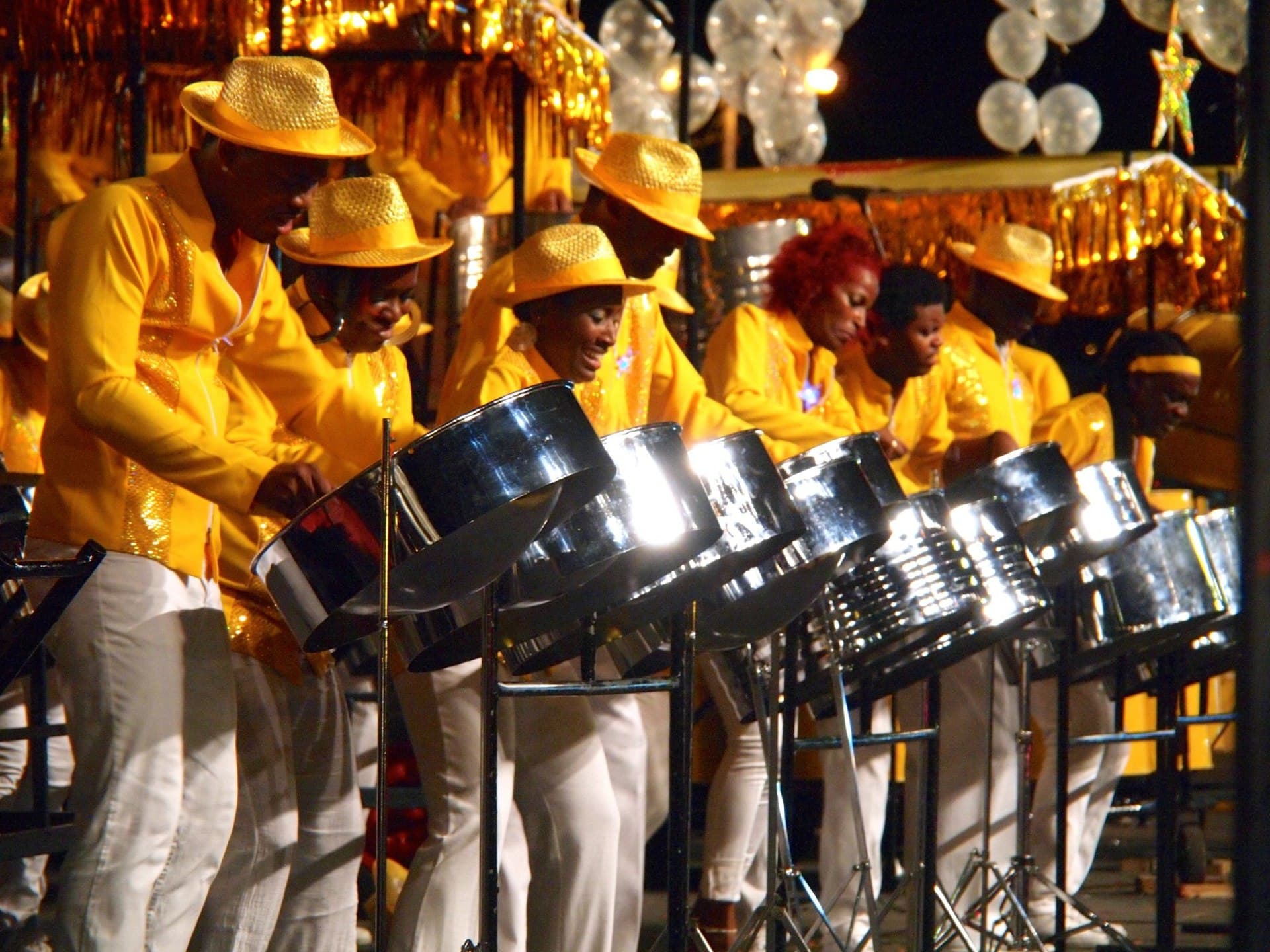
Image credit: Kip1234, via Wikimedia Commons, CC BY-SA 4.0
Year: 1965Independence
Wayne Berkeley's Fan Fair
Wayne Berkeley designs Fan Fair, his first full band and one of the first major examples of fantasy mas. He goes on to win Band of the Year 11 times, including six in a row from 1989 to 1994.
Year: 1972Independence
Carnival in May
Carnival is postponed to May because of a polio epidemic, one of the rare years the festival has been moved.
Year: 1973-1975Independence
Lord Shorty creates soca
Lord Shorty's 'Indrani' (1973) blends calypso with Indian instruments such as the dholak and dhantal. 'Endless Vibrations', released in the mid-1970s (sources give 1974 or 1975), carries the new 'sokah', the soul of calypso, to a wide audience, and a journalist's spelling, soca, sticks.
Year: 1976Independence
Minshall's Paradise Lost
Peter Minshall designs Paradise Lost for bandleader Stephen Lee Heung, with around 1,500 masqueraders. It wins Band of the Year and opens the 'Minshall era' of mas as epic street theatre.
Year: 1977-1978Independence
Calypso Rose makes history
Calypso Rose becomes the first woman to win the Road March in 1977 with 'Gimme More Tempo', and in 1978 the first woman to win the national calypso crown. The Calypso King competition becomes the Calypso Monarch.
Year: 1983-1987Independence
River and Carnival Is Colour
Minshall begins his River trilogy in 1983, with the Washerwoman and Mancrab, followed by Callaloo and The Golden Calabash. In 1987 his Carnival Is Colour wins Band of the Year.
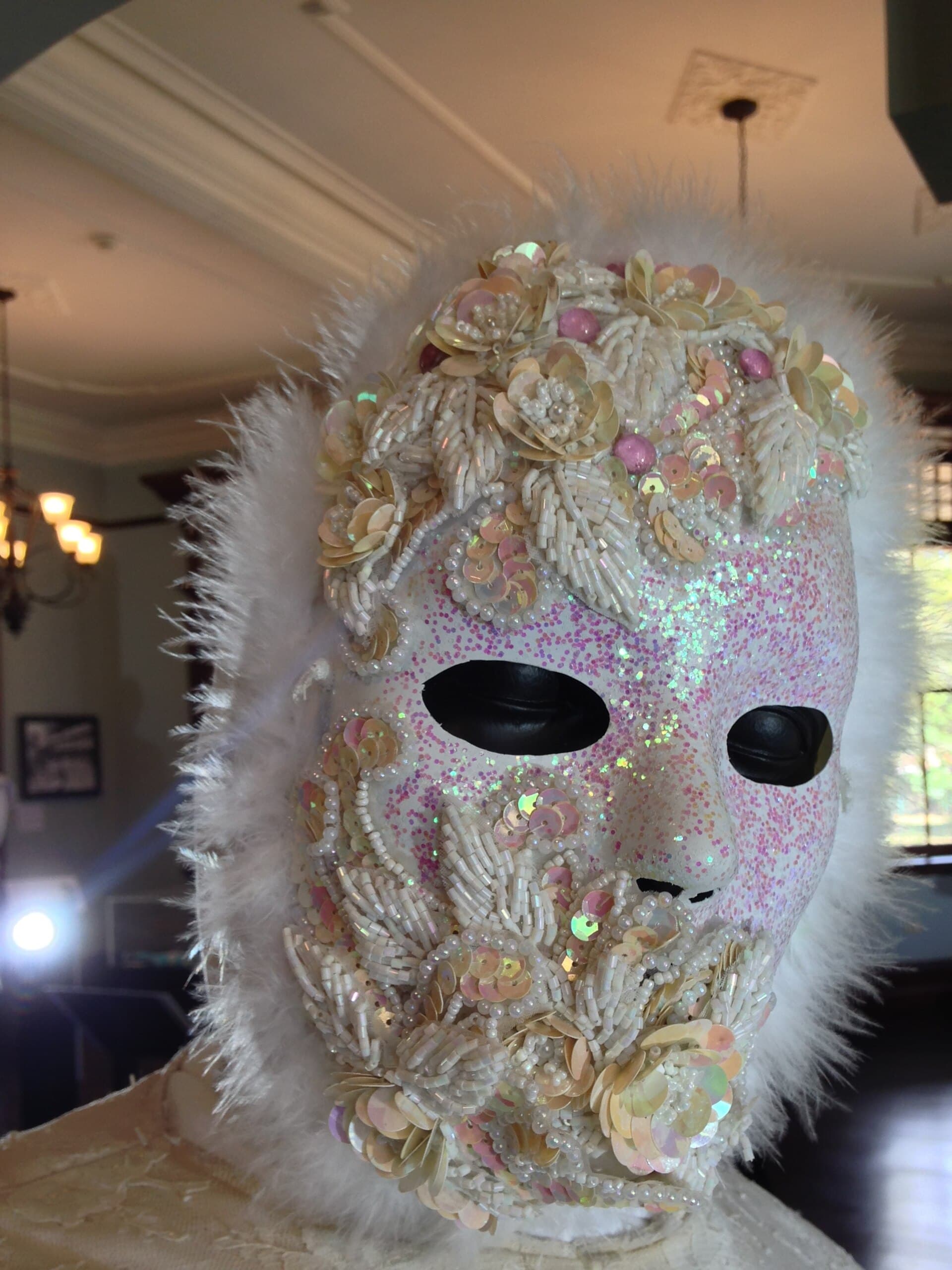
Image credit: Lisa Allen-Agostini, via Wikimedia Commons, CC BY-SA 4.0
Year: 1991Independence
The National Carnival Commission
The National Carnival Commission (NCC), successor to the Carnival Development Committee, is established by Act 9 of 1991, assented to on 5 August 1991. It remains the state body that manages Carnival.
Year: 1992Independence
Steelpan named the national instrument
The steelpan is declared Trinidad and Tobago's national instrument, a long way from the days when panmen were treated as outlaws.
Being verified: we are still checking this entry against primary sources.
Sources
Year: 1993Independence
The first Soca Monarch
The first Soca Monarch final is held on 11 February 1993 at The Spectrum in Port of Spain. SuperBlue wins with 'Bacchanal Time', which also takes the Road March.
Modern era
2004 to 2026, 4 entries
Year: 2004Modern
Tribe and the all-inclusive band
Dean Ackin, his wife Monique Nobriega and her sister Lana turn their popular section of the band Poison into Tribe, which says it has been on the road since 2004 and pioneered the all-inclusive model where one package covers costume, drinks, food and security. Bikini-and-beads pretty mas dominates the road.
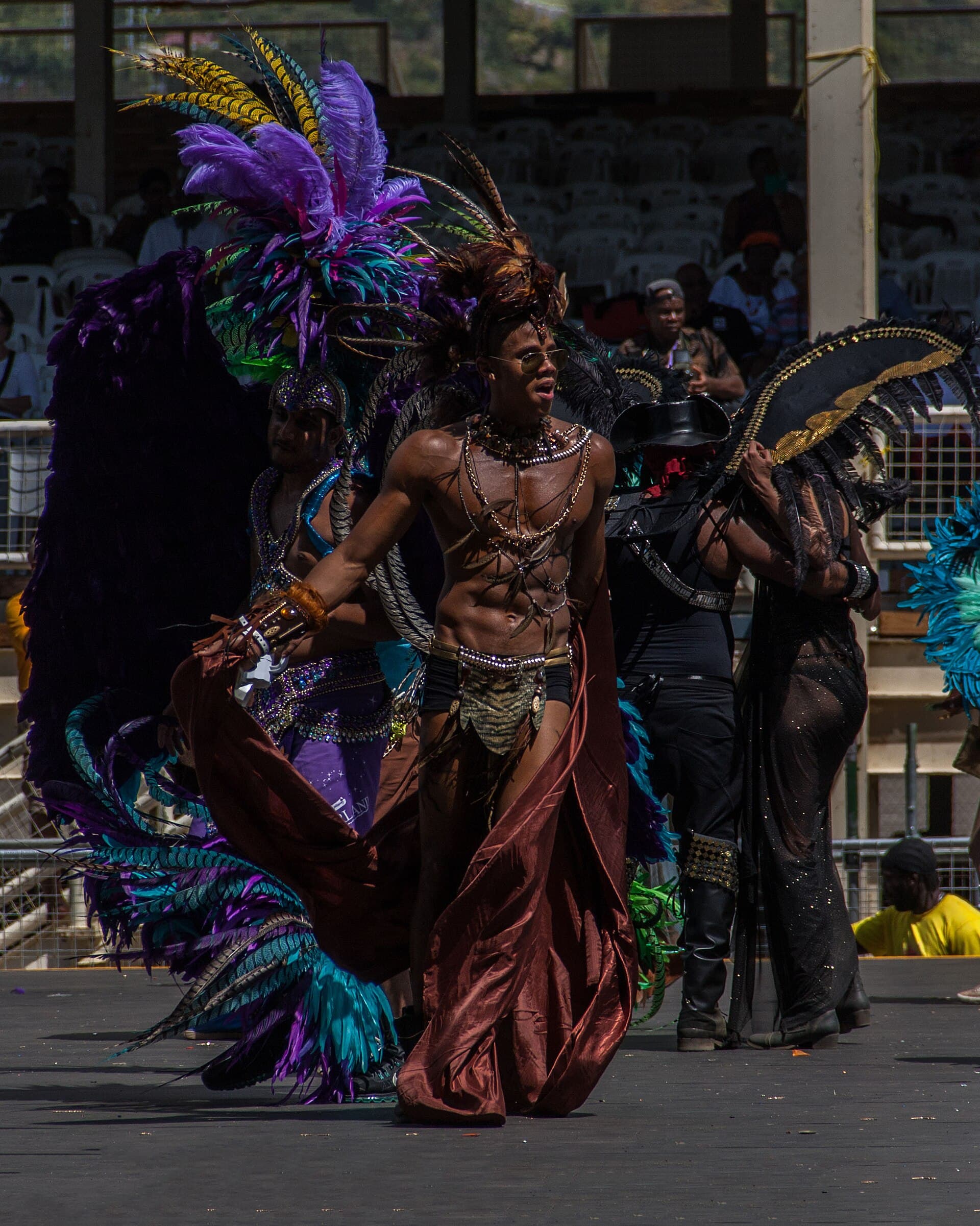
Image credit: Idobi, via Wikimedia Commons, CC BY-SA 4.0
Sources
Year: 2021-2022Modern
The pandemic stops the parade
In September 2020 the Prime Minister declares that Carnival 2021 is 'not on' because of Covid-19. The festival takes a two-year break, and Panorama is also cancelled in 2021 and 2022.
Year: 2023Modern
Carnival comes home
After the two-year break, Carnival returns in February 2023, in soca's 50th anniversary year. Voice's 'Long Live Soca' captures the mood.
Year: 2026Modern
Machel's record, Lost Tribe's crown
Machel Montano wins the 2026 Road March with 'Encore', played 171 times, for a record 12th title, passing Lord Kitchener's 11. The Lost Tribe's Island Circus is Band of the Year, its fifth Large Band crown and fourth in a row. In September, Trinidad and Tobago mourns the Mighty Sparrow, who dies in New York at the age of 91.
How this timeline is put together
Each entry lists the sources we checked it against. Entries marked as being verified are still waiting on a second, independent source. Last updated 3 October 2026. Know a date we have wrong? Send a correction.
Go deeper
- HistoryCanboulay: The Cane Fires and the 1881 Riots That Made CarnivalThe story of Canboulay (cannes brûlées), from cane fires on slavery-era estates to emancipation torch processions, kalinda stickfighting, the 1881 Canboulay Riots, and the re-enactment held before dawn on Carnival Friday.Read more
- HistoryFrom Calypso to Soca: The Sound of Trinidad CarnivalHow kaiso grew from the chantwell's call into calypso, how Lord Shorty invented soca in the 1970s, and how the Road March, Soca Monarch and stars from Kitchener to Machel shaped the soundtrack of Carnival.Read more
- HistoryJ'ouvert in Trinidad: Meaning, History and How to PlayWhat does J'ouvert mean? Trinidad J'ouvert history from Canboulay to mud and paint bands, plus the 2027 date, what to wear, safety tips and road etiquette.Read more
- HistoryThe Evolution of Pretty MasFrom Harold Saldenah's Roman legions and George Bailey's Africa to Wayne Berkeley's fantasy, Peter Minshall's theatre and today's bikini-and-beads all-inclusive bands: how pretty mas changed, and why people still argue about it.Read more
- GlossaryTrini dictionaryJab jab, moko jumbie, kaiso and the other words you meet in Carnival history.Read more