Calypso Rose
Also known as McCartha Linda Sandy-Lewis, Crusoe Kid, Calypso Queen of the World
Tobago's Calypso Rose, the Mother of Calypso: first woman to win the Road March (Tempo, 1977), whose 1978 Calypso King win forced the contest to become the Calypso Monarch.
- From
- Bethel, Tobago
- Genres
- calypso, soca
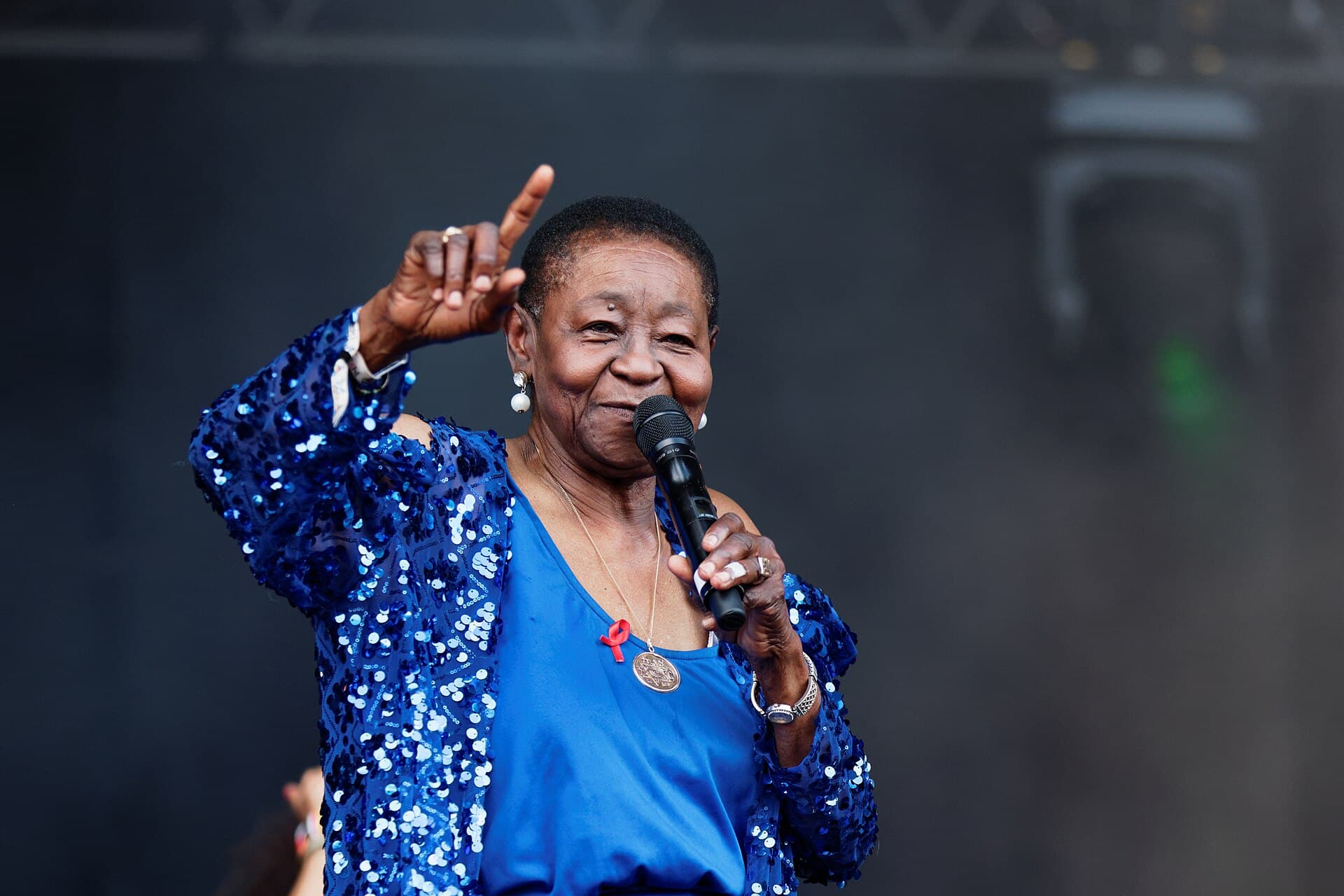
Image credit: Thesupermat, via Wikimedia Commons, CC BY-SA 4.0
Known for
- First woman to win the Road March, with Tempo in 1977
- Won the Calypso King competition in 1978, which led to its renaming as the Calypso Monarch
- Calypso Queen title every year from 1972 to 1976
- Fire in Me Wire (1966)
- Far From Home (2016), co-produced with Manu Chao, a Top 10 album in France
Watch Calypso Rose
Who she is
Calypso Rose was born McCartha Linda Sandy-Lewis in Bethel, Tobago, in 1940, one of 11 children of a Baptist minister who considered calypso "the devil's music".1,2 At nine she went to live in Trinidad, where her foster mother's wind-up gramophone introduced her to the great calypsonians. She was writing calypsos at 13, and by 15 she was performing as "Crusoe Kid", with a first minor hit called "Glass Thief".2
She changed her name, she explained, because "the rose is the mother of all flowers. I don't have children myself but I consider myself mother to all the female calypsonians who came after me."2
Signature sound and key songs
Rose's music runs the full spectrum, from social and political commentary to party music, gospel and inspirational songs.1 She has composed over 800 songs and recorded more than 20 albums.1
Her classic "Fire in Me Wire" arrived in 1966 and, in the words of her UWI citation, "was so nice it was done twice".1 Then in 2016, more than 60 years after she wrote her first calypso, she had a late-career triumph with Far From Home, co-produced with Manu Chao, which went straight into the Top 10 in France.2
Carnival legacy
Calypso Rose did not just compete in a man's world, she changed its rules. From 1972 to 1976 she won the Calypso Queen title. In 1977 she became the first woman to win the Road March, with "Tempo", and it would be 22 years before another female calypsonian took that title.1 In 1978 she won the Calypso King competition itself, which led to the contest being renamed the Calypso Monarch in her honour.1
Her honours include an honorary Doctor of Letters from The University of the West Indies in 2014, the title of UNICEF Goodwill Ambassador for former child soldiers, and the keys to the cities of Arima and Port of Spain. She overcame a stammer, physical abuse, gender discrimination, heart attacks and cancer along the way.1 As the UWI citation put it, she is "the undisputed Calypso Queen of the World".1
Start here
- "Tempo" (1977): the historic Road March.
- "Fire in Me Wire" (1966): a timeless classic.
- "Calypso Blues": her official video, a great first listen.
- "Calypso Queen" (2016): her own coronation song.
- "Leave Me Alone" (with Manu Chao): her duet with the producer who helped spark her late-career boom.
Sources
More soca artists
- Soca artistMachel MontanoThe King of Soca: a performer since childhood, 12-time Road March winner and the record holder since Carnival 2026, when Encore broke Lord Kitchener's 50-year-old mark.Read more
- Soca artistMical TejaBelmont-born songwriter turned soca star whose DNA swept Carnival 2024, winning the Road March with 341 plays and the Young Kings calypso crown in the same season.Read more
- Soca artistLord KitchenerAldwyn 'Kitch' Roberts, the Grandmaster of calypso: Windrush pioneer, voice of London Is the Place for Me, 11-time Road March winner and the composer steelbands love most.Read more
Sources
- UWI Today: Calypso Rose honorary doctorate citation (Dec 2014)
- The Guardian (UK): Calypso Rose, 'I'm fighting for everyone, regardless of sex' (21 Jul 2016)
- Calypso Rose official YouTube channel
- YouTube: Calypso Rose, Calypso Blues (Official Music Video)
Last verified 3 October 2026. Spotted something wrong? Send a correction.