Lord Kitchener
Also known as Kitch, Aldwyn Roberts, Grandmaster of Calypso
Aldwyn 'Kitch' Roberts, the Grandmaster of calypso: Windrush pioneer, voice of London Is the Place for Me, 11-time Road March winner and the composer steelbands love most.
- From
- Arima, Trinidad
- Genres
- calypso, soca
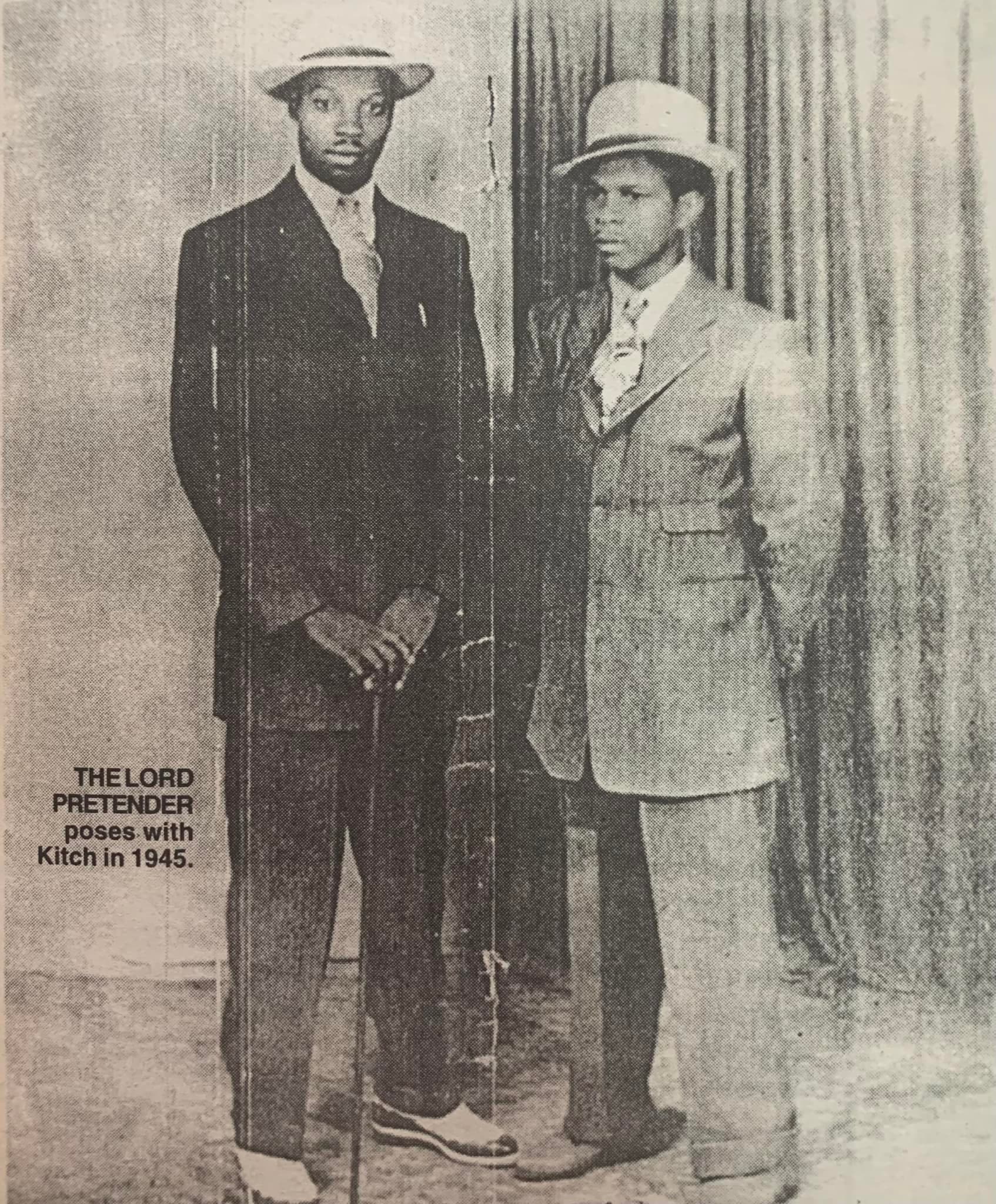
Image credit: Unknown author, via Wikimedia Commons, Public domain
Known for
- 11 Road March titles between 1946 and 1976, a record that stood for 50 years
- Road March winners including Jump in Line, Mama This is Mas and Flag Woman
- London Is the Place for Me, a calypso of the Windrush generation in Britain
- Calypso Monarch in 1975
- Sugar Bum Bum, an early soca hit
Who he was
Aldwyn Roberts was born in Arima on 18 April 1922 and took the stage name Kitchener as a teenager, determined, despite a lifelong stammer, to make his fortune singing calypso. "Lord" was a title his fans gave him.1 He died on 11 February 2000, aged 77, and Trinidad still calls him simply "Kitch".1
In 1948 he sailed to Britain on the Empire Windrush, the ship that carried the first large group of post-war Caribbean migrants. His arrival at Tilbury, guitar in hand and ready with a topical verse, was caught on film, and he stayed for 14 years.1 Songs like "London Is the Place for Me" made him the voice of that generation, and in London he was part of the scene that gave birth to the Notting Hill Carnival in the late 1960s.1
Signature sound and key songs
Kitch's calypsos are witty, melodic and full of double meaning, built on humour and the quirks of everyday life. He could be political too: some of his early songs, including "Yankee Sufferers" (1945), were banned by the British colonial authorities.1
He loved steelpan from its beginnings in the 1940s and composed for steelbands, and the pan side still plays him.1 At the 2004 Pan on the Road competition in downtown Port of Spain, Neal & Massy Trinidad All Stars won the conventional-band category with his "Sugar Bum Bum", while St James Tripolians took the single-pan title with a Kitchener medley of "Flag Woman", "67" and "Mas in May".2 That song was itself one of the early soca hits: when Kitch embraced Lord Shorty's new sound, Nailah Blackman told VICE, "everyone did as well".3
Carnival legacy
Kitchener won his first Road March in 1946 with "Jump in Line", then dominated the 1960s and 1970s after returning home in 1962, with winners including "Mama This is Mas" and his last, "Flag Woman", in 1976.4 His total of 11 Road Marches stood as the record for half a century, until Machel Montano won his 12th in 2026.4 He also won the Calypso Monarch title in 1975, after which he and the Mighty Sparrow, his only real rival, stepped back from the competition to open the field for others.1,5
For more than 30 years he ran his own calypso tent in Port of Spain, nurturing talents such as David Rudder and Black Stalin.1 By the time of his death his face had appeared on a Trinidad and Tobago postage stamp, and a statue of him stood outside Port of Spain.1
Start here
- "London Is the Place for Me": the Windrush classic.
- "Sugar Bum Bum": Kitch goes soca.
- "Flag Woman" (1976): his final Road March.
- "Mama This is Mas": pure Carnival joy.
- "Jump in Line" (1946): the first Road March.
Sources
-
The Guardian (UK): Lord Kitchener obituary (2000) (opens in a new tab) ↩ ↩2 ↩3 ↩4 ↩5 ↩6 ↩7 ↩8 ↩9
-
NALIS: Carnival Winners 2004 (archived) (opens in a new tab) ↩
-
Trinidad Express: Machel breaks Kitch's record (2026) (opens in a new tab) ↩ ↩2
-
Trinidad Express: Machel cops 11th Road March title (2025) (opens in a new tab) ↩
More soca artists
- Soca artistMachel MontanoThe King of Soca: a performer since childhood, 12-time Road March winner and the record holder since Carnival 2026, when Encore broke Lord Kitchener's 50-year-old mark.Read more
- Soca artistMical TejaBelmont-born songwriter turned soca star whose DNA swept Carnival 2024, winning the Road March with 341 plays and the Young Kings calypso crown in the same season.Read more
- Soca artistCalypso RoseTobago's Calypso Rose, the Mother of Calypso: first woman to win the Road March (Tempo, 1977), whose 1978 Calypso King win forced the contest to become the Calypso Monarch.Read more
Sources
- The Guardian (UK): Lord Kitchener obituary, by Peter Mason (12 Feb 2000)
- Trinidad Express: Machel breaks Kitch's record (Feb 2026)
- Trinidad Express: Machel cops 11th Road March title (2025)
- VICE: Nailah Blackman profile (on Kitchener and early soca)
- NALIS: Carnival Winners 2004 (archived), Pan on the Road results
Last verified 3 October 2026. Spotted something wrong? Send a correction.